
On the last day of June, let’s celebrate our favorite landscapes in our backyards, vacation spots, or places we would love to spend more time visiting. Summer is being celebrated in the northern hemisphere, so landscapes that include water are also encouraged.
As the US begins celebrating our Independence Day on July 4th this week, indulge me while I take you on a tour of Yosemite National Park’s amazing landscapes.
“…Like every American, you carry a deed to 635 million acres of public lands. Even if you don’t own a house or the latest computer on the market, you own Yosemite, Yellowstone, the Grand Canyon, and many other natural treasures.” – John Garamendi, Congressman
If you’re not a US citizen, statistics show that international visitors to Yosemite make up 9% of the annual visits (as of 2022), with total visits averaging 3.6-4 million people. The top countries to visit Yosemite were Germany, Korea, Japan, and the United Kingdom. Yosemite ranked 6 on this list of most visited US national parks. Source
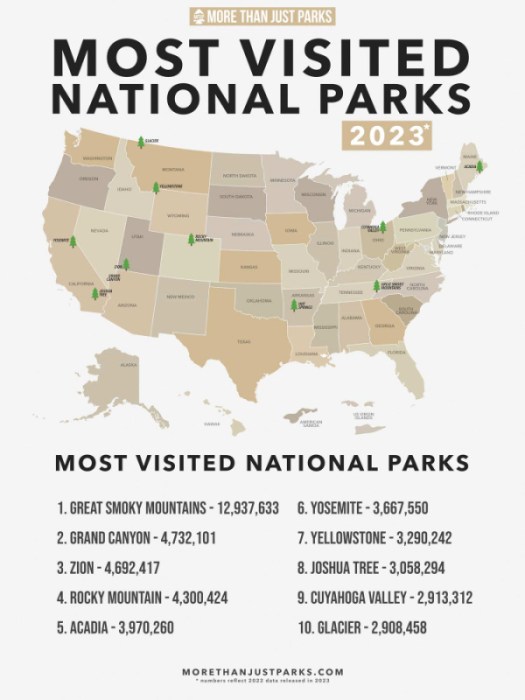
“Yosemite’s 747,956 acres (1,169 square miles), nearly 95 percent of which are designated Wilderness, are home to hundreds of wildlife species and over a thousand plant species. The park’s rich habitats range from thick foothill chaparral to conifer forests to expanses of alpine rock.” Source
Yosemite Valley
When people think of Yosemite National Park, most think of Yosemite Valley. Like any popular national park, multiple systems protect these irreplaceable public lands and habitats.

After over 25 visits to Yosemite, I’ve learned a few things to improve our visits. Driving into any national park is all about timing, which means arriving at the entrance gates early to avoid long lines.
After the intersection at the park entrance into the valley, you can begin to see various vistas peeking through the trees. Once there, the roads become one-way and are eventually closed to auto traffic.

The first real look is at Inspiration Point, where you can see the iconic domes of Yosemite Valley. On the left, you see the sheer face of El Capitan. Half Dome, one of the most recognized granite domes on the planet, stands about the center of the image. On the right stand Cathedral Rocks, from where Bridalveil Fall drops 620 feet to the Valley floor.
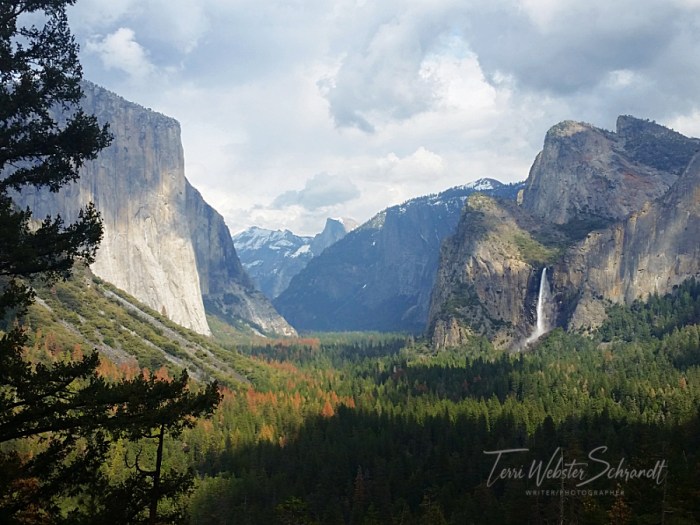
“Yosemite claimed me.” ― Robert Redford
Another turn-off in the Valley, the road takes you through a tunnel, and this view (aptly named “tunnel view”) shows Half Dome from a closer perspective.

Shortly, El Capitan looms above you to the left. The huge granite monolith stands 3000 feet above the Valley floor, a dream climb for mountaineers and rock climbers. The final elevation to the top is 5200 feet.
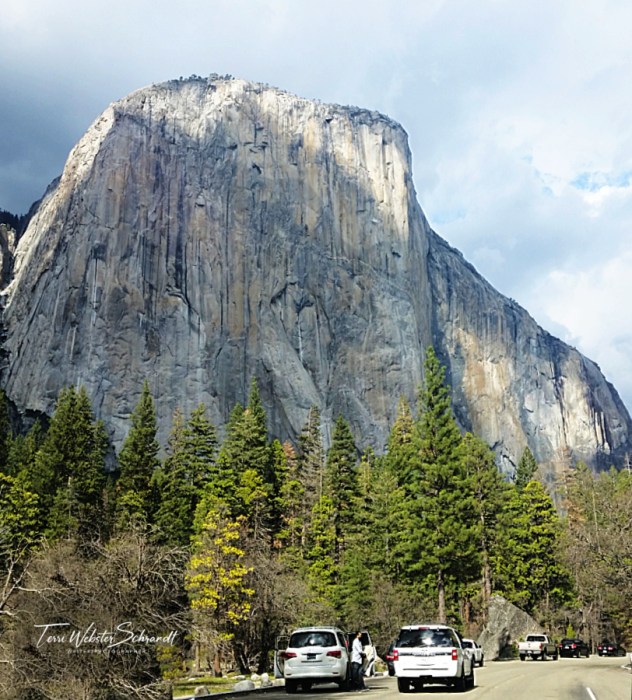
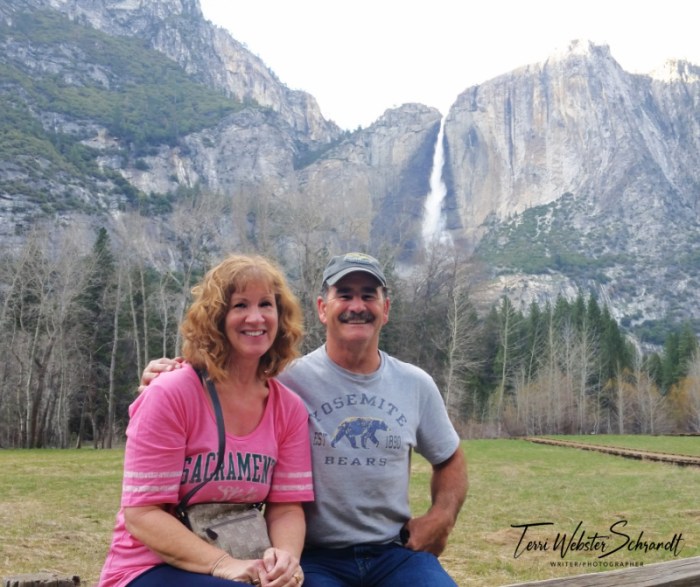
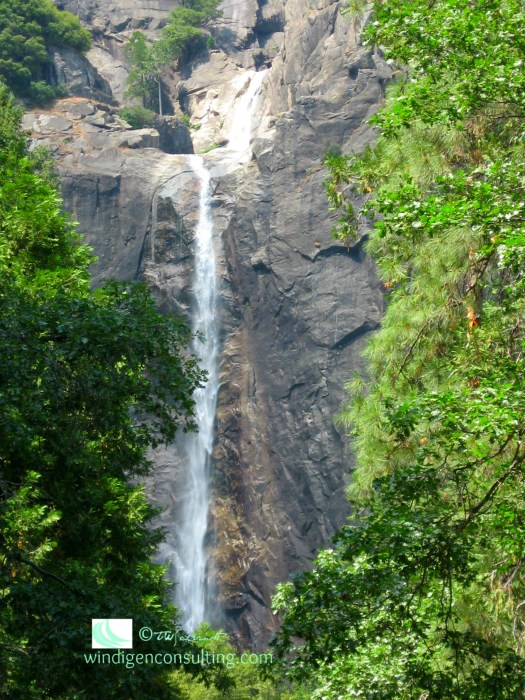
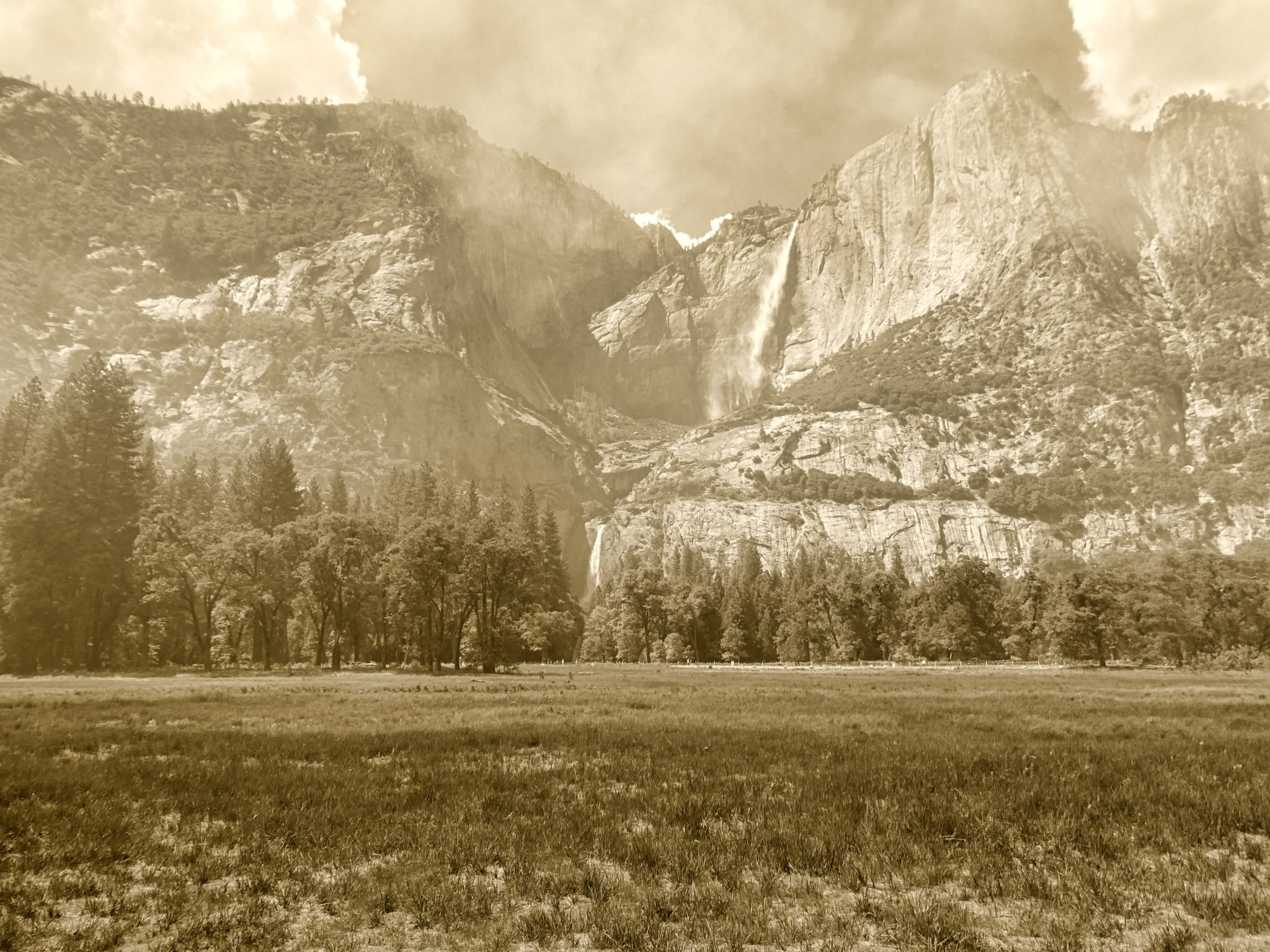
Several vistas open as you drive through the park, but there is limited parking along the road. From here, you can see Yosemite Falls.

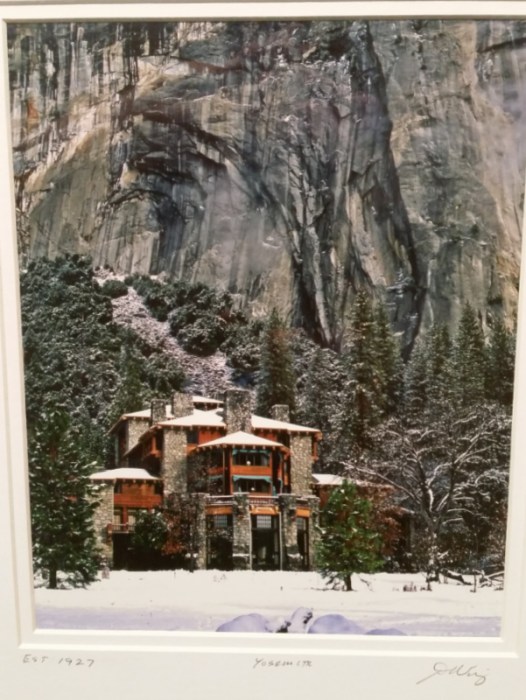
There are lovely visitor habitats in the form of campgrounds in Yosemite Valley. The famous Ahwahnee Hotel is a popular tourist destination and costs a mere $500+ per night. This painting of the hotel demonstrates how the hotel’s architecture blends into its habitat.
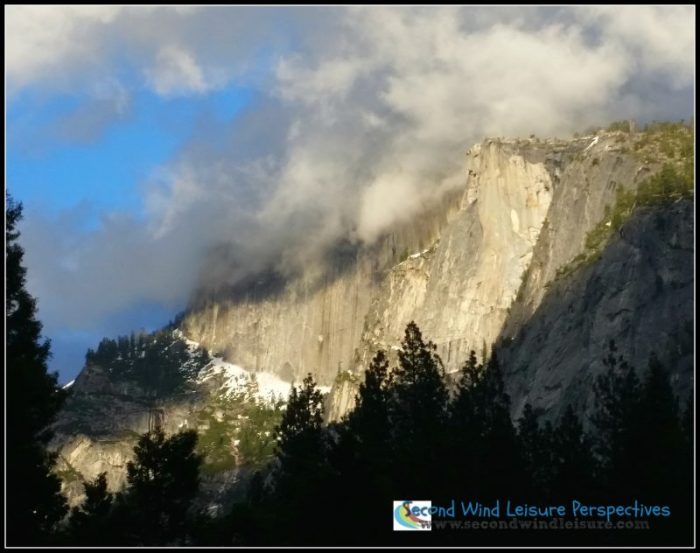
Further into the park, you must park your vehicle in the day-use areas and walk or ride the shuttle busses to get around to the various scenic attractions. The free shuttles stop at various locations (you get a free map at the entrance) where you can view Half Dome.
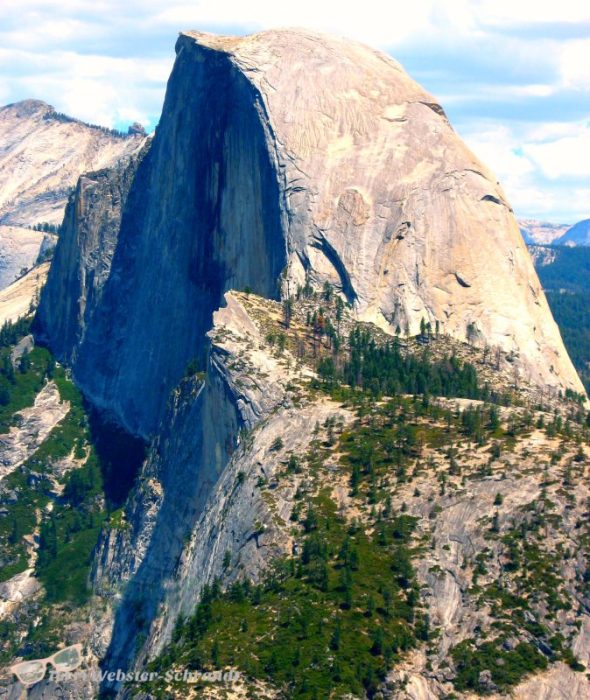
Visitors can also drive to Glacier Point to see the best views of Half Dome.
“The great rocks of Yosemite, expressing qualities of timeless yet intimate grandeur, are the most compelling formations of their kind. We should not casually pass them by, for they are the very heart of the earth speaking to us.” ― Ansel Adams
Yosemite’s High Country–Tuolumne Meadows
“Tuolumne Meadows embodies the high-country of the Sierra Nevada, with its broad sub-alpine meadows and granite domes and peaks. The Tuolumne River, Lyell Fork, and Dana Fork flow through the vast, colorful meadows bursting with seasonal wildflowers. The meadows are surrounded by stands of western white pine, mountain hemlock, and lodgepole pine.” Source
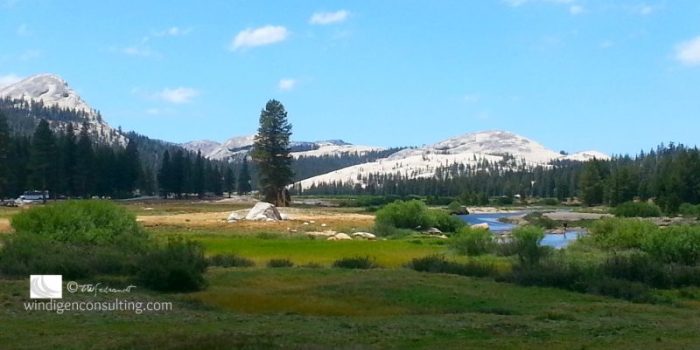
Most visitors to Yosemite NP come to the Valley and think that is all to see. Summer is the high season, and the temperatures are HOT! I’ve been there among the crowds and traffic. My parents got smart and realized that the less-visited high country of Yosemite was the place to spend two to three weeks each summer. I remember my first time camping in Tuolumne Meadows at age 10 in 1970.
Tuolumne Meadows is located in the high country of Yosemite, and summer daytime temperatures average 70F.
This image (from a plane flight) puts Tuolumne Meadows into perspective compared to Yosemite Valley.
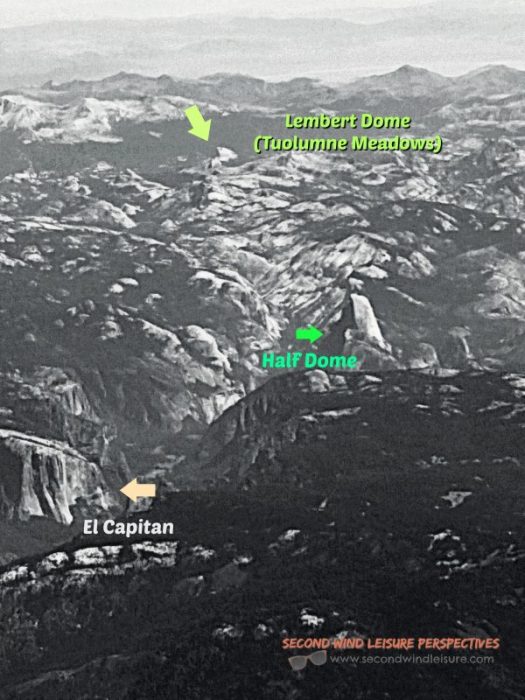
Highway 120, which runs through the entire park, also known as Tioga Road, takes you from Yosemite Valley to Tuolumne Meadows. It’s about an hour-and-a-half drive by automobile.

A must-see stop before entering into the Tuolumne Meadows area is Olmsted Point. From here, you can get a breathtaking view of Half Dome from a totally different angle.
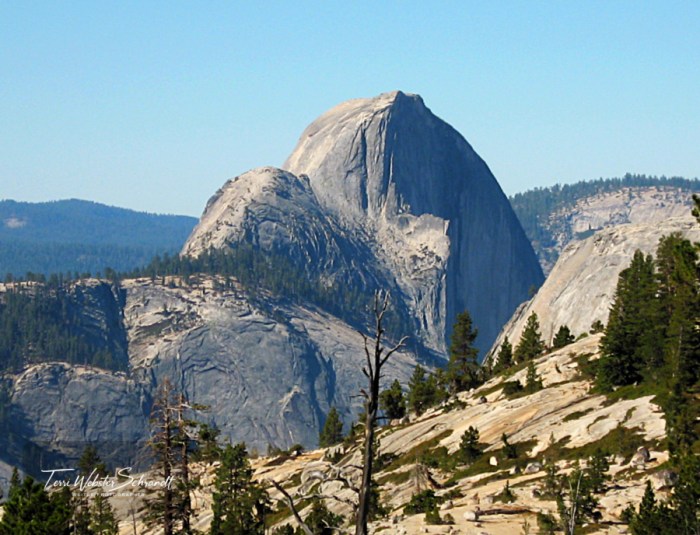
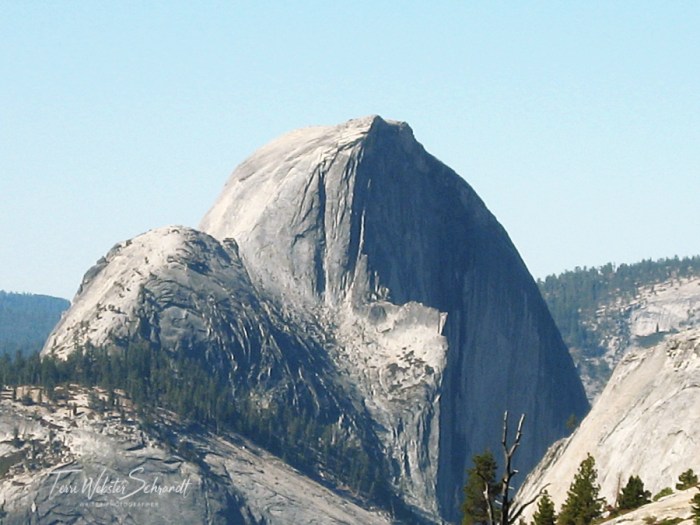
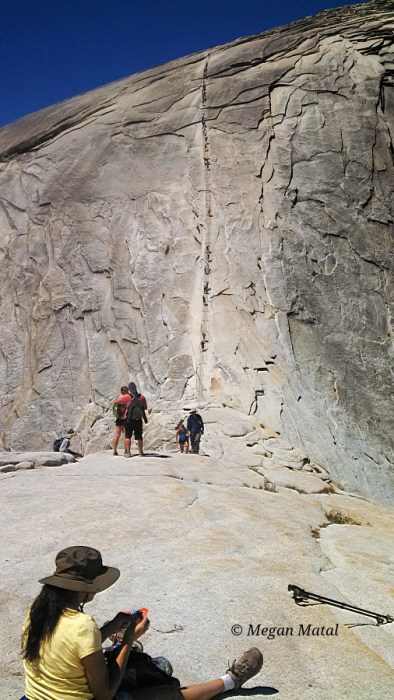
Do you see the deep vertical striations on the rounded part of the dome? To the left of those is the cable route where people “hike” (climb) Half Dome! And not rock climbers—regular people.
In 2013, my daughters and brother tackled the climb up Half Dome. These are my daughters’ photos. My brother is on the right, hiking up. The top of the dome stands at 8,800 feet elevation.

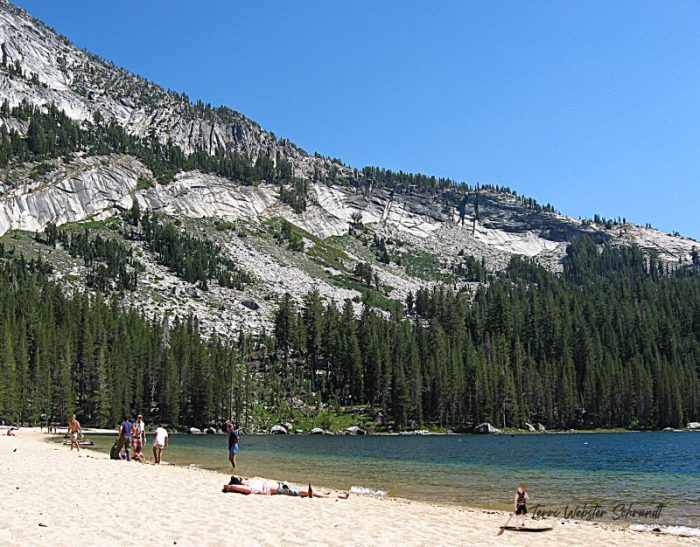
After winding your way from Olmsted Point through the Lodgepole pine forests, you soon see Tenaya Lake. A great spot with a beach!
From here to the heart of Tuolumne Meadows, the Lembert Dome parking lot and trailhead are a mere 14 minutes by car. This view awaits you…
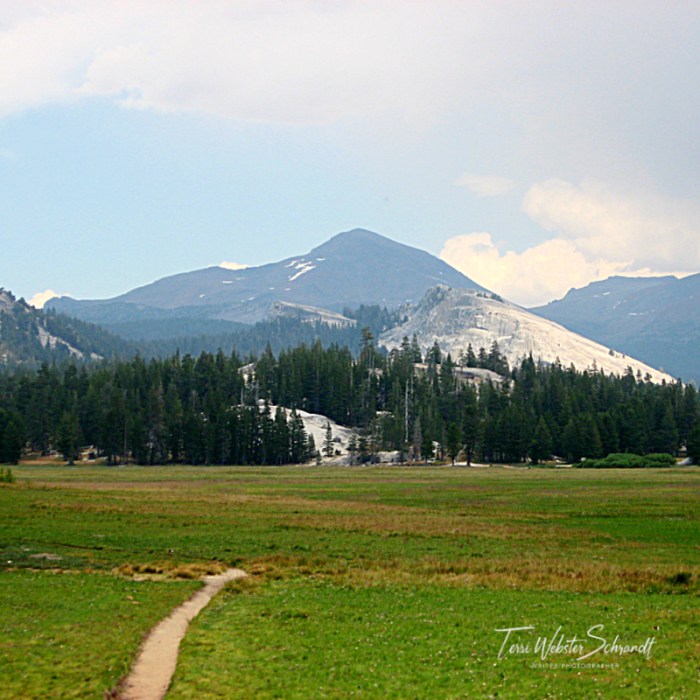
Lembert Dome is a recognizable dome in Tuolumne Meadows. One can walk a ways up (just above the treeline). The ranger-led sunset hikes from here are legendary.

These are the same hikers (my daughters and brother) who tackled Half Dome that summer. Walking up Lembert Dome was an easy hike compared to that.
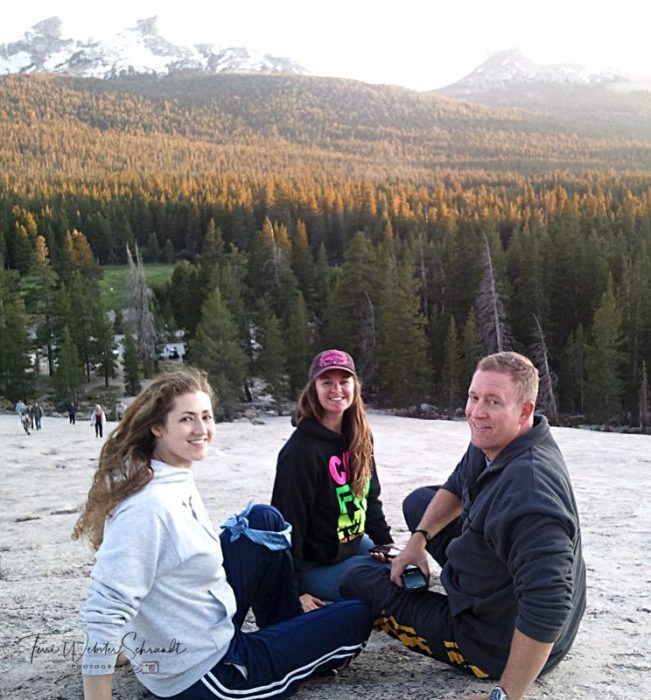
Hikers can choose to walk around the back of Lembert Dome for a moderately easy one-mile hike. Hiking to the top of Lembert Dome places you at 9400 feet in elevation.

This was my longed-for summer habitat.
“I knew my destiny when I first experienced Yosemite.” ― Ansel Adams
This is the east entrance to the park, boasting an elevation of 9,945 feet. Walking in this elevation for a few minutes can take your breath away.
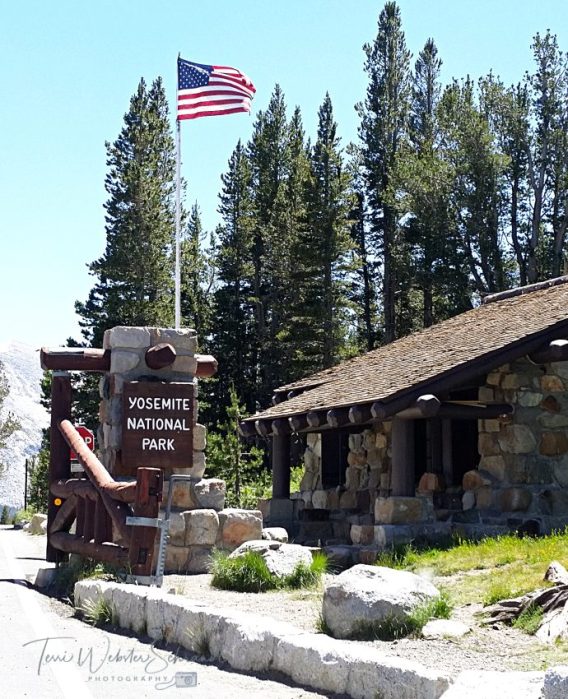
I hope you enjoyed the whirlwind tour of Yosemite Valley and Tuolumne Meadows. It looked this way during the 2020 pandemic and the last time I visited. You couldn’t drive into the park unless you had a pre-purchased permit that year.

In early August, my family and I will finally scatter my mother’s ashes in her beloved Tuolumne Meadows. After record-breaking snowfall in 2023-24, the campground and most amenities at Tuolumne’s 8600 feet elevation remain closed in 2024. We’ll all be staying in Lee Vining, near Mono Lake. Stay tuned for more Yosemite pics from this trip.
“The wildlife and its habitat cannot speak, so we must and we will.” – Theodore Roosevelt

Sharing for Brian’s Last on the Card, Johnbo’s CellPic Sunday, Lens-Artists: Habitat, and Marsha’s Wednesday Quotes.
Sunday Stills Photo Challenge Reminders
The Sunday Stills weekly-themed photo challenge is easy to join. You have all week to share and link your post.
- Remember to title your blog post a little differently than mine.
- Please create a new post for the theme or link a recent one.
- Entries for this theme can be posted all week.
- Tag your post “Sunday Stills.”
- Don’t forget to create a pingback to this post so that other participants can read your post.
- I also recommend adding your post’s URL to the comments.
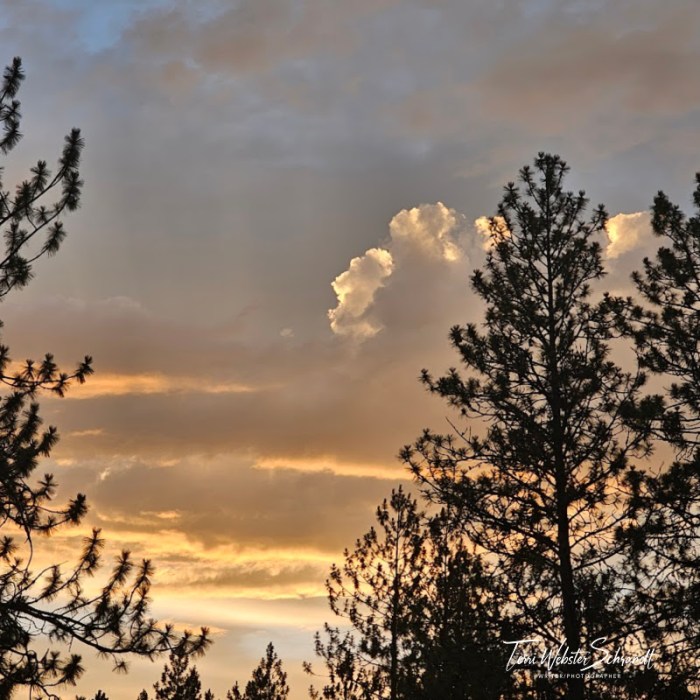
I will leave you with this golden skyscape for Brian’s Last on the Card challenge.
The July themes are ready to view on my Sunday Stills Photo Challenge Page, which is updated monthly. Please join me on July 7th for the monthly color challenge (red/white/blue).

© 2024 Copyright — secondwindleisure.com — All Rights Reserved











What is YOUR perspective? Please include your name if WP identifies you as “anonymous.