
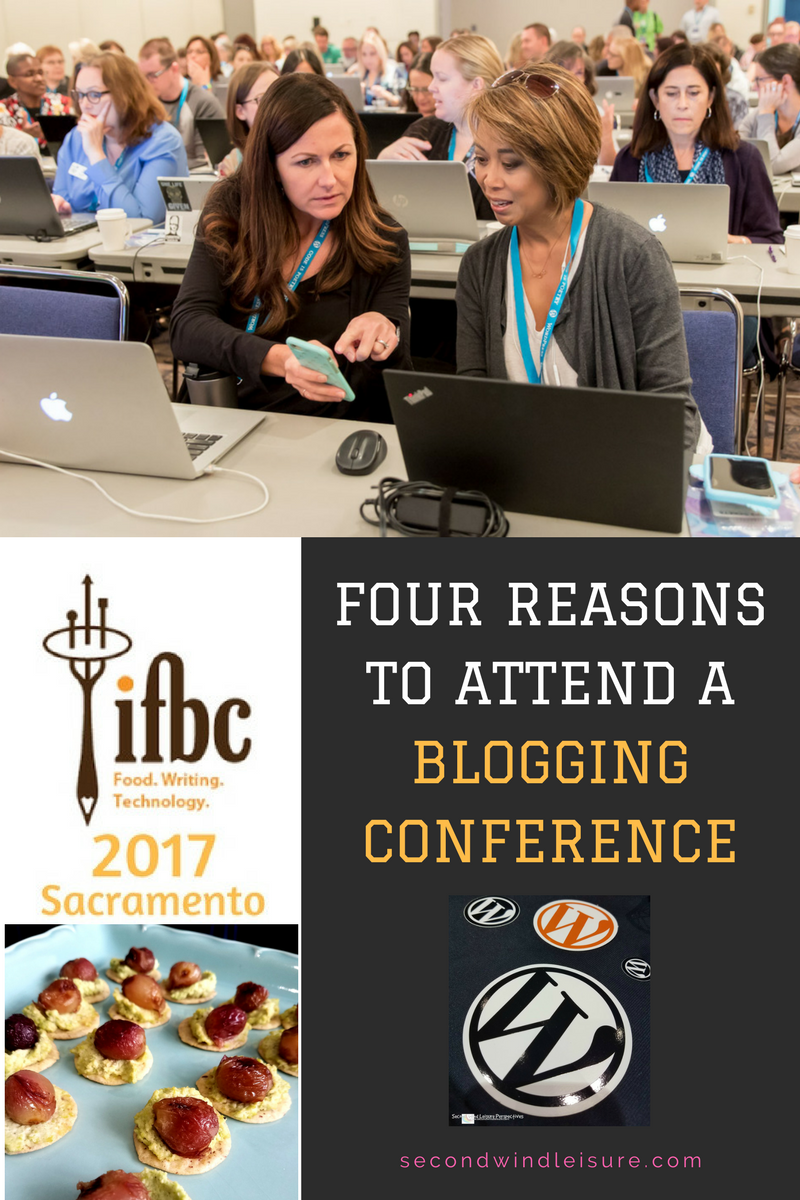
In September, I had the pleasure of attending not one, but two blogging conferences in my hometown of Sacramento, California.
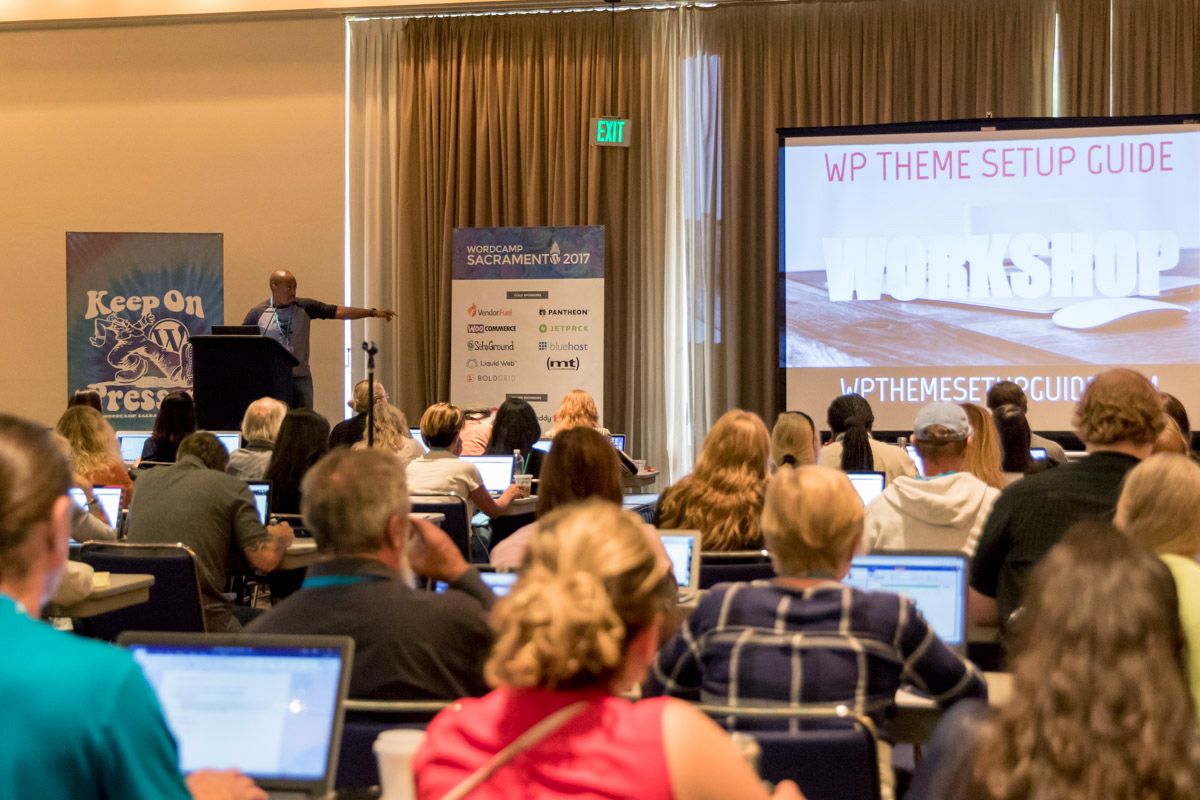
WordCamp Sacramento 2017 focused on WordPress developers and website design, but had an entire bloggers track. This alone brought in over 200 more attendees than previous WordCamps.
The International Food Bloggers Conference, aka IFBC, spent three consecutive years here in “The Farm to Fork” Capital of Sacramento, and travels to New Orleans in 2018.
Last January, I shared some preliminary thoughts on attending blogging events in Need More Inspiration? Attend a Blogging Event.
Before I share my four takeaways, here are some general thoughts on choosing a blogging conference.
Choosing a Conference
Having a blogging (or writing) conference come to your town is a huge gift.

Through a Sacramento Bloggers event in 2016, I discovered the IFBC conference would be offered the following year. Although I wasn’t a food blogger, past attendees assured us there was enough general information that it would be wise to attend. Although the IFBC was pricey, at over $300 for registration, the IFBC offered a deeply discounted rate to “Citizen Bloggers,” who agreed to share three blog posts before, during and after the conference.
At a price under $100, I registered well in advance, not knowing what the sessions or agenda would be.
In April, again through my association with Sacramento Bloggers, we found out that Sacramento was hosting its third annual WordCamp, this time with an entire track devoted to beginner bloggers, and how to use WordPress tools.
In case you don’t know, there is a difference between WordPress dot com (through Automattic, Inc), the free blog platform many bloggers use, and the WordPress dot org platform used on self-hosted websites. I have two sites: this one, Second Wind Leisure Perspectives, (you are reading here now) and my self-hosted website for my business Windigen Consulting.

Registration for WordCamp Sacramento was an unbelievable $40 for the entire weekend. This is attributed to the amazing and generous sponsors! When I applied for and was selected to present on the bloggers’ panel “Blogging Success and Monetization,” my registration fee was FREE! Plus, all attendees received conference t-shirts, swag and a useful printed program.
There was enough general information shared at sessions that I could apply to both this blog and my consulting website. Attending two local conferences almost back-to-back was a little tiring, but my drive to downtown was only a few minutes and parking rates for weekends were dirt cheap!
Without further adieu, here are my Four Reasons to Attend a Bloggers’ Conference:
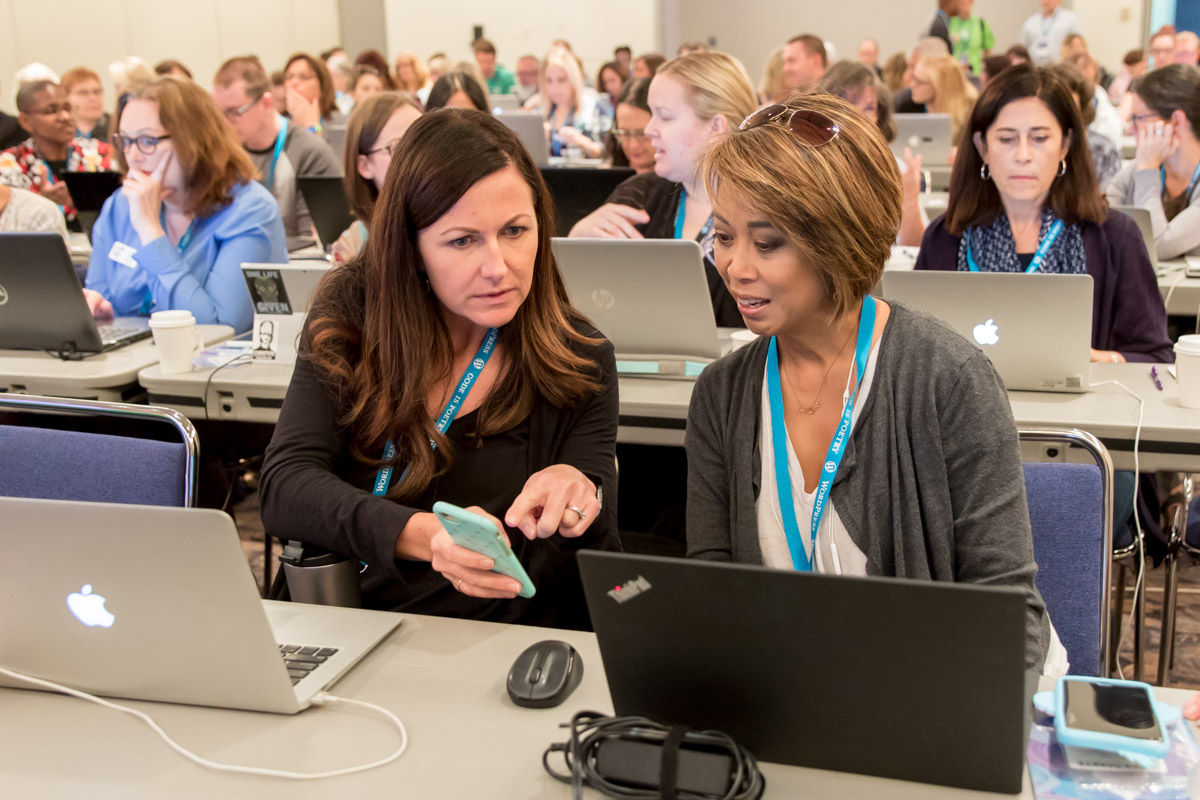
1. Meeting other Bloggers
The main reason I attend conferences is to meet other bloggers in person, the actual folks with whom I have developed an online blogging relationship. Oftentimes, the world of a blogger can be a lonely place. It is a special treat to engage with other bloggers in person, who “get” you! And so nice to not have to type your reply for a change!
Before the conference:
- Once you are registered for the conference, plan ahead and make some business cards for your blog, even if you just print them yourself.
At the conference:
- Network with others. Most conference-goers are easy to spot with their name tags. Do not be shy about introducing yourself to another blogger. Exchanging those new business cards is helpful and useful.
- At your table, say hello to those seated beside you. This may be difficult for some folks, but you can simply ask, “Are you a blogger,” or “What is your blog/website about?” Be prepared to answer this question, too.
- In one session, the presenter asked for everyone’s cards so she could send us her slides and information. Many folks had awkward slips of paper rather than cards, which could be mistaken for trash and did not present a professional look. I was glad I had mine!
After the conference (or during):
- Find your new blogger friends on social media and follow them.
2. Networking the Room In-Person and on Social Media
- Use your time to walk around and explore all the conference areas. At the IFBC, there was a huge swag (gift) table where we selected one of each item to take home at the end of the first day. There were some leftover goodies the next day and we were encouraged to take them.
- Be sure to meet and thank the conference organizers and sponsors. Most of these folks donate their time to put on these events. The sponsors and vendors also donated in-kind services and/or money to make the conference happen. One way you can also acknowledge them is by sharing their names and hashtags on Social Media.
- Most conferences encourage social networking during the sessions. While this practice is beneficial, I find it rather distracting to the presenters. Use this at a minimum while the person is speaking, besides, how are you listening to what they are saying, while your fingers are tapping away on the screen? There is plenty of time in between sessions to share.
- Do take photos of interesting conference items, like logos, t-shirts, session signs, displays, food, etc. Those make great sharing options for Instagram and Facebook where images are the key. Use the conference hashtag where possible while sharing. This is also a great opportunity to build your social media following, while following others. Some of these photos I used for this post!
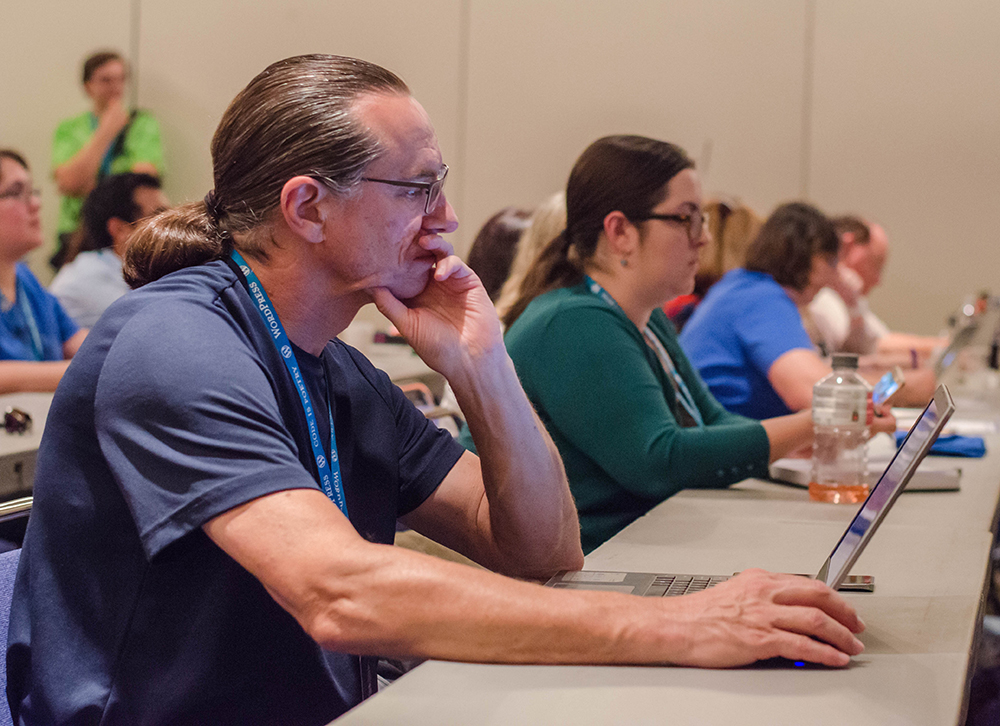
3. Learning New Skills
Attending a conference provides an opportunity for professional development and learn the blogging best practices from the experts. Both conference organizers sent e-mails on a regular basis with up-to-date information as the conference dates approached.
Before the conference:
- Read the agenda and look at the sessions that interest you. Have a back-up plan if one gets cancelled (it happens).
- Ask yourself what you hope to get out of attending the conference.
During the conference:
- Attend sessions. Have you ever been to a conference and didn’t go to the sessions? Back in my work days, I saw this practice all the time. I never understood the point of spending money, then not actually learning something.
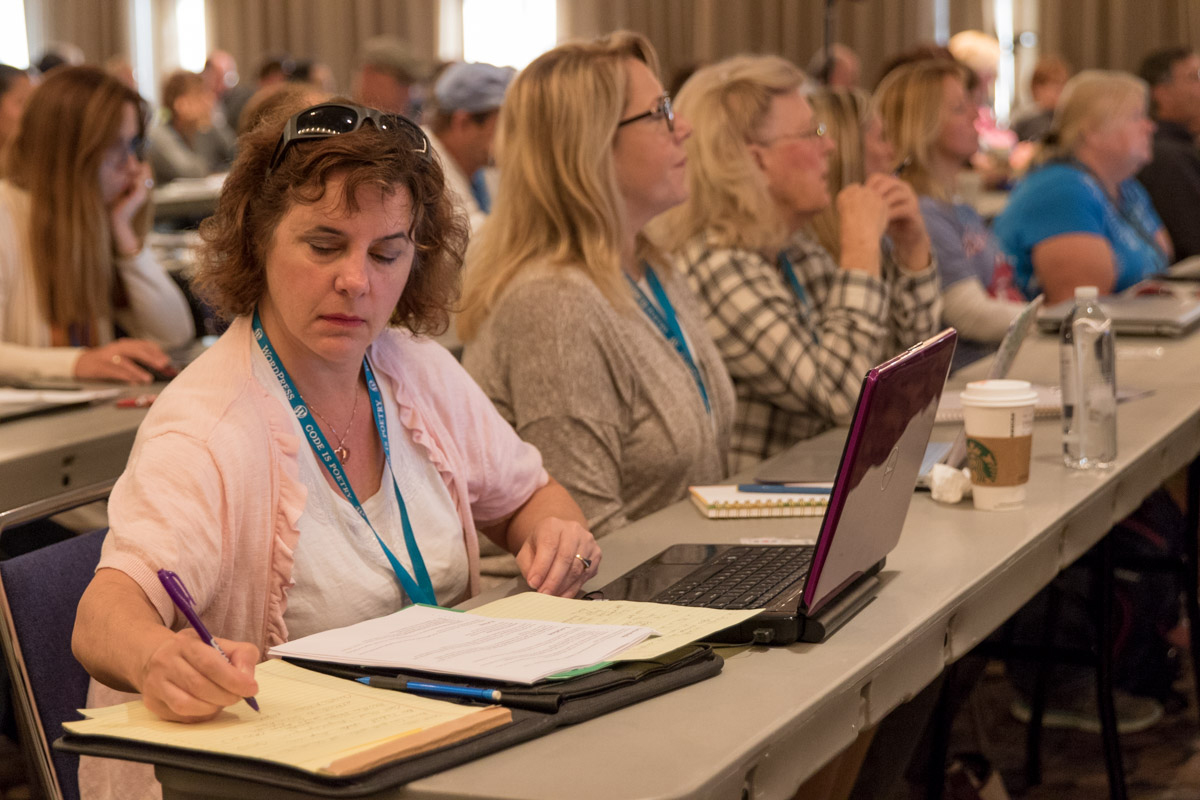
- Take notes. Conference attendees take session notes a variety of ways, whether by pen and notepaper, recording with a device, or by typing on a laptop.
- Talk with the presenters after the session, and take the opportunity to thank them and ask questions.
After the conference:
- Watch for follow-up e-mails from the conference organizers. Many presenters offered their slide shows in a shared format that all attendees could access.
- At WordCamp, professional photographers took lots of photos and shared them with attendees (that is how I got many of the images in this post). I’m told WordCamp images are public domain, so no need to attribute them to the photographers.
4. Putting What You Learned into Practice
This is often neglected, especially if you attend a conference out of town. Traveling home, you may be tired or needing to catch up at work, and you may be tempted to put your bag of notes and goodies away for a few days. Those nuggets of great ideas can easily be lost or forgotten.
At the conference:
- While taking notes, give yourself 1-2 actionable items from each session that you can implement within 24-48 hours.
- Put it on a to-do list, your day planner/calendar or sticky note or somewhere you can access it quickly. I sent myself a list in a calendar event with a nagging reminder so I wouldn’t forget.
After the conference:
- Following up with these notes is important, or why did you bother to attend? Get as much as possible out of your conference experience.
At the IFBC, I heard two excellent speakers. One presented on “Massive Instagram Growth” and gave us actionable how-to items to implement quickly. Another speaker talked about SEO and provided excellent examples, as well as her slide deck at the end. I saw lots of folks snapping photos of these slides for later use!
Those were my top four reasons. Here are some additional nuggets for you to consider.
The Conference Speakers
- Have patience with the presenters. Although they are sharing their expertise on a topic, he or she is unlikely a seasoned speaker. Using a microphone and managing a laptop while speaking is frightening to many folks! Speaking from experience, it can be extremely nerve-wracking to stand in front of 100+ people and present, so take that into consideration and try to jot down the best nuggets of information they have to share.
- Many conferences provide a sharing link for all the slideshows used at the conference.
- If you just don’t enjoy a session and there is another offered concurrently, do not be afraid or intimidated to walk out of an uninteresting or irrelevant session and move on to another one if possible. You paid for this information when you registered and you have the right to move around.
Take Time to Evaluate and Perhaps Volunteer
Be sure to evaluate the conference and offer your feedback. If you were disappointed with something, take a moment to describe the issue in detail. At the end of the survey, there might be an opportunity to sign up to volunteer or present for future conferences, if that is something in which you are interested.
If you do have to opportunity to present, you will likely get comped for the entire conference, so that is always a good incentive.
My Overall Impression of Two Blog Conference Weekends
I am glad I went. I hadn’t been to a professional conference since Bloggers at Midlife in 2016, and before that was when I presented at a work conference in 2013.
I learned several actionable items and concepts as well as met many people I could ask for assistance if needed. Don’t miss the opportunity to attend a blogging conference in person. Keep checking your WordPress admin panel for updates on WordPress events in your community.
Network with local bloggers, if possible, to see if other events are being planned.
I also have an opportunity to meet with several fellow bloggers over Veteran’s Day weekend in mid-November as we converge in Southern California. I am very much looking forward to spending some quality time with these special friends..

© 2010-2050 Terri Webster Schrandt— secondwindleisure.com — All Rights Reserved. All content on this blog is protected by copyright and may not be copied, reposted, or reblogged without written permission.






What is YOUR perspective? Please include your name if WP identifies you as “anonymous.