
“It is not only fine feathers that make fine birds.” – Aesop
If you follow my blog, you’ll know that this was year two of nesting Say’s Phoebes (Tyrant Flycatcher) that chose our patio cover to make their nest. You probably recognize this photo of 2024’s fledglings.
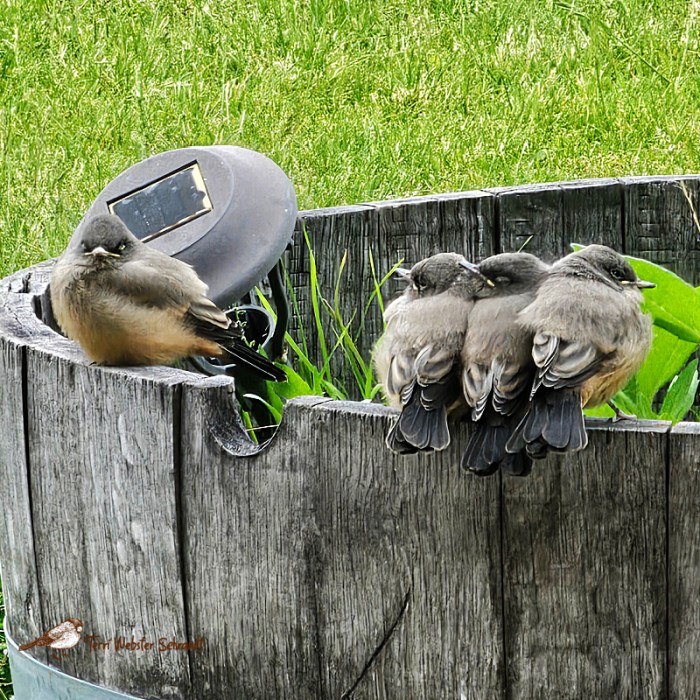
Although they lost their first clutch of eggs in May this year, they tried again and laid four eggs. Four babies successfully fledged last Saturday.
Since we moved to Eastern Washington in early 2021, we have seen over 30 species of birds visit our property. Despite our lack of trees, we are surrounded by countless Ponderosa Pines and various deciduous trees. We’ve now planted 28 trees and they are growing well. The trees are a little too small to make a proper nest for most birds. However, once feeders are up and bird baths are full, they flock to those spaces.
We had a 40-foot by 12-foot patio cover built on the back of our house in summer 2023. In April 2024, a western flycatcher couple decided to make their nest in the south corner of the cover. After researching, I discovered more facts about these adorable birds. They prefer using man-made structures to house their nests. Pretty smart!
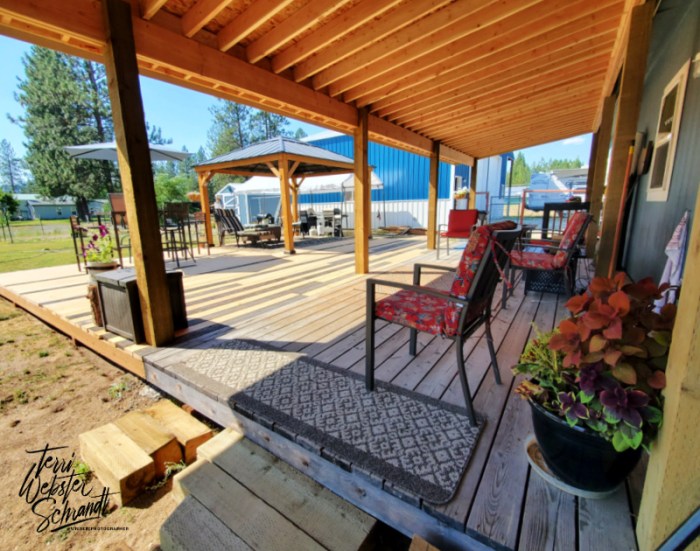
From our guest bathroom window, we had a clear view of the nest. For the last two seasons, we’ve had front row seats to the nesting behavior of these birds.
Season Two Saga
When the first set of babies died in the nest raid in May, I grieved for a few days. We were still in Arizona, and I felt helpless to know what had happened. “Fine Feathered Friends” is an apt description of how I felt and still feel about these sweet birds.
We arrived home at the end of May. We were delighted that the Phoebe couple were still hanging around our yard. It turns out they were busy adding material back into the nest. On June 6th, I saw Mama in the nest!
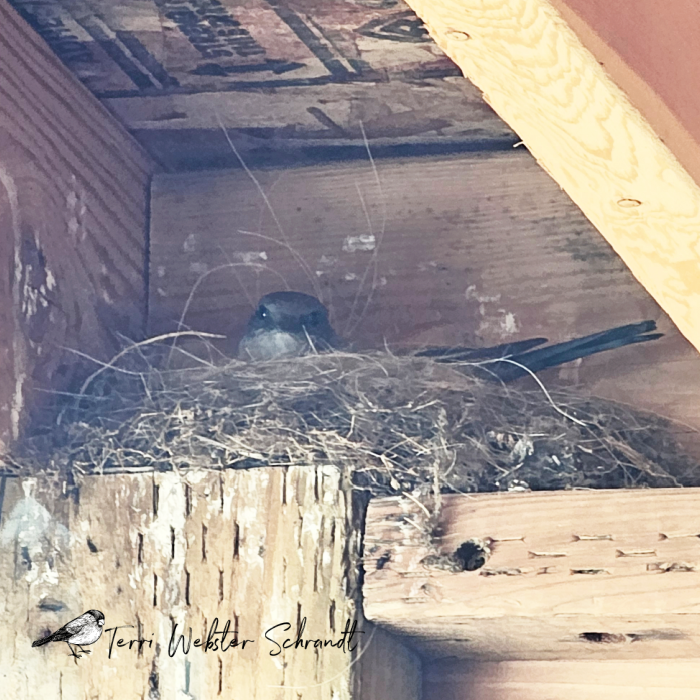
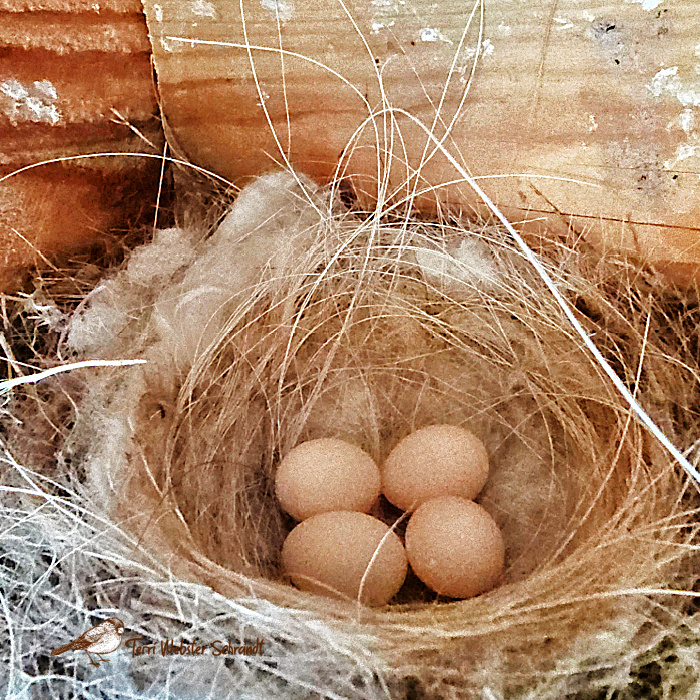
When I had the chance and was careful not to vex the parents who were off feeding, I grabbed the ladder and snapped a shot of the eggs. Hooray!
Once Phoebes lay eggs, they hatch within 14-16 days. We witnessed the change in the mama’s posture in the nest.
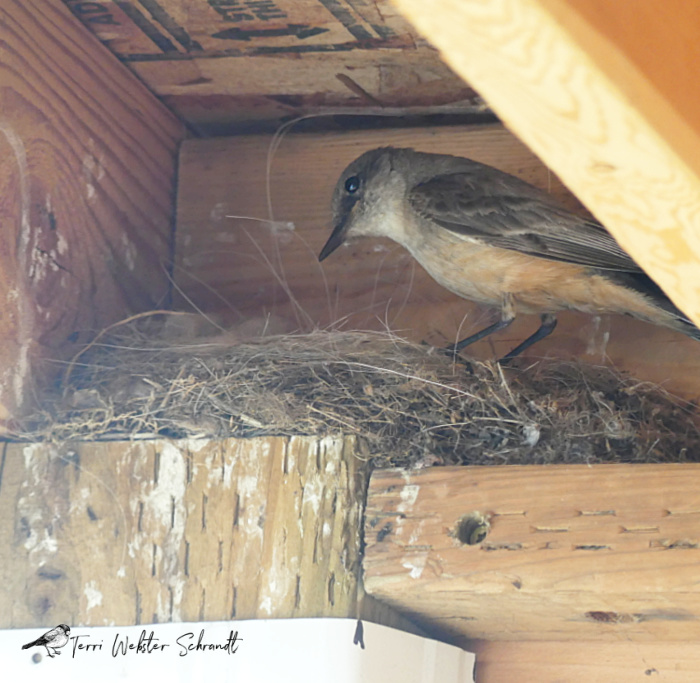
While Mom attended to the babies, Papa flew tirelessly to and fro to keep predators away and to give her breaks.
It wasn’t long before we saw the fuzzy-headed babies!

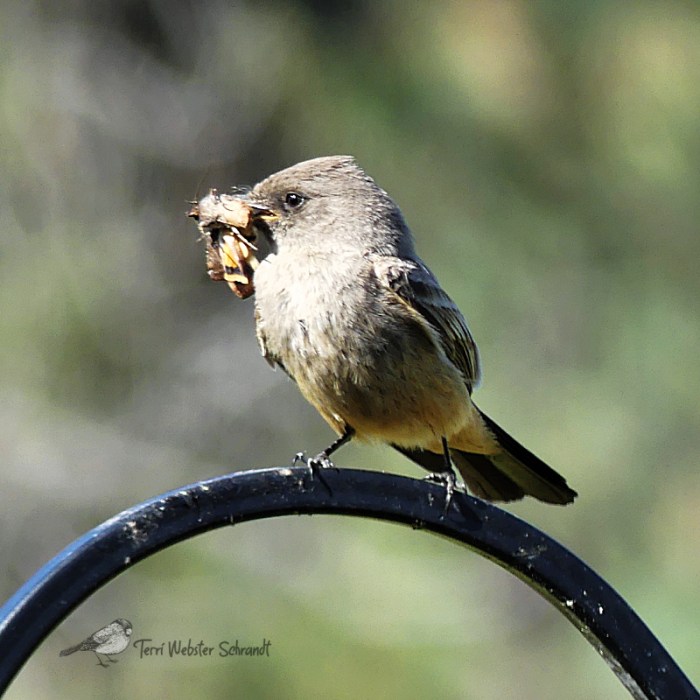
Mom and Pop took turns, feeding the babies live insects for hours daily. How quickly the babies grew! Fun fact: Western Flycatchers eat as many as 6000 flies a DAY!
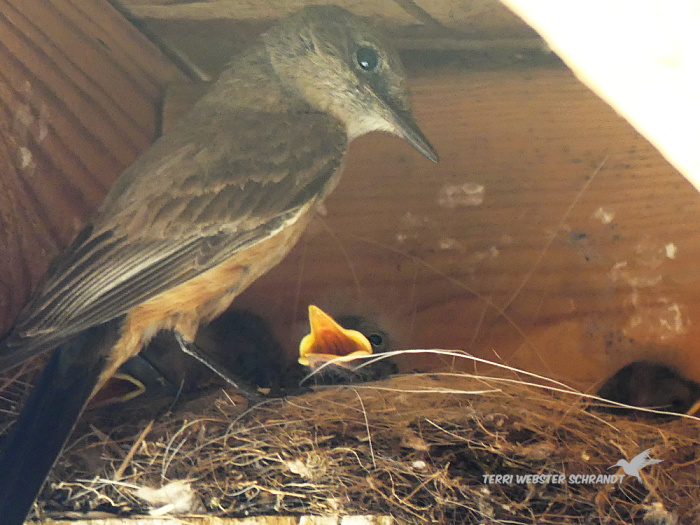
Notice the baby’s beaks. Most birds have something called “baby gape.” They have an enlarged mouth with a flexible, bright orange or yellow membrane on the sides of their beaks. This ensures that live insects fit into their mouths while the color triggers the parents to feed the hungry nestlings.
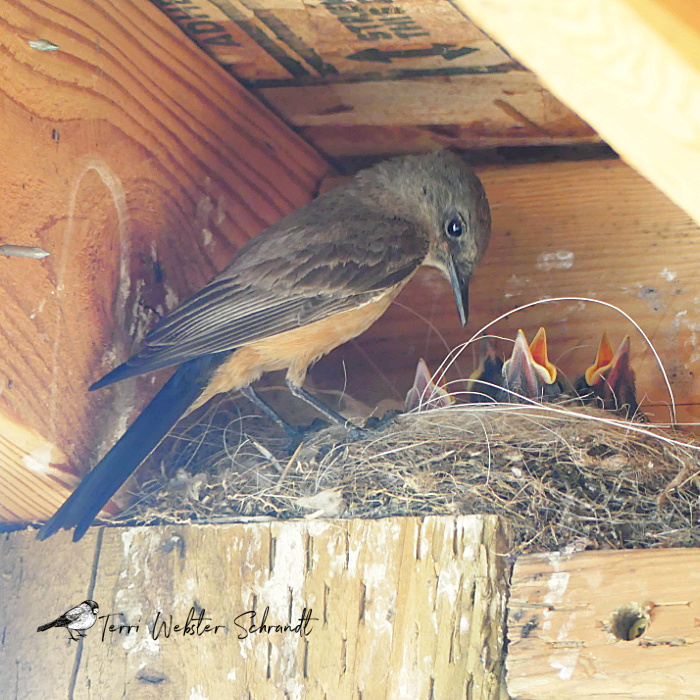
In three weeks from the time they hatch, they are ready to fledge out of the nest. Because the babies are so big at this point, Mama doesn’t stay in the nest with them at night.
This might explain what happened to the first nest while we were away. A cat likely came into the yard, climbed the post, and dislodged the nest. The one dead baby I saw was still tiny and had few feathers. In a previous post, I shared that my hubby placed sheet metal around the top third of the post. This was to deter animals from reaching the nest. It worked! We also gave credit to Brodie, our dog, as he keeps the cats away!
The first one escaped the crowded nest on July 10th. I thought, “Oh no, it’s evening, what will happen at night?” Papa stayed close by and fed it.

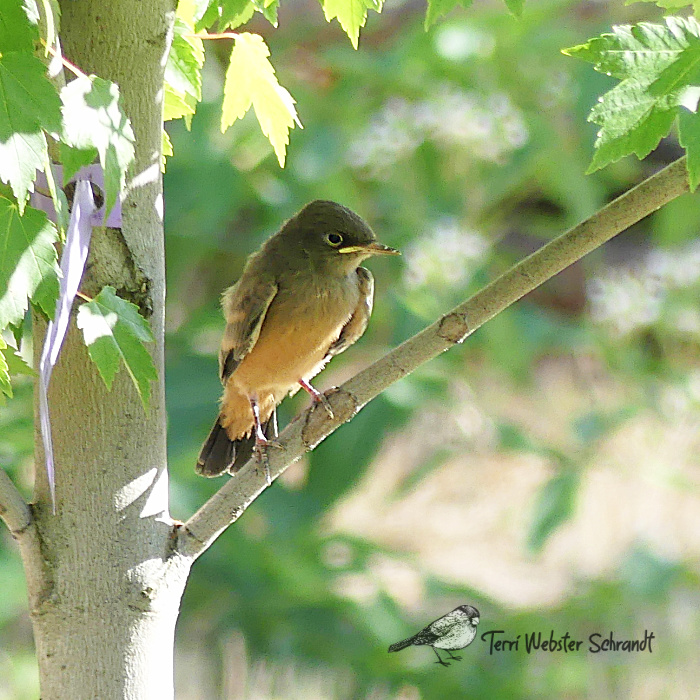
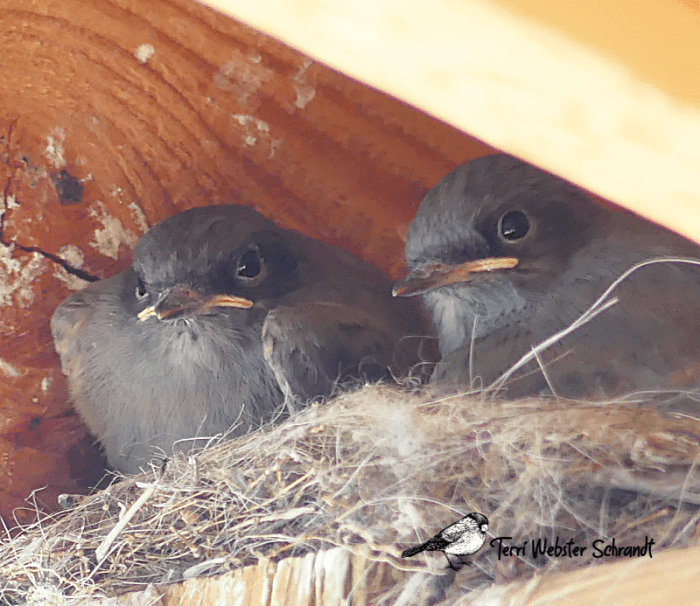
Two hours later, I looked in the nest again from our window, and all four babies were back! Whaaattt?
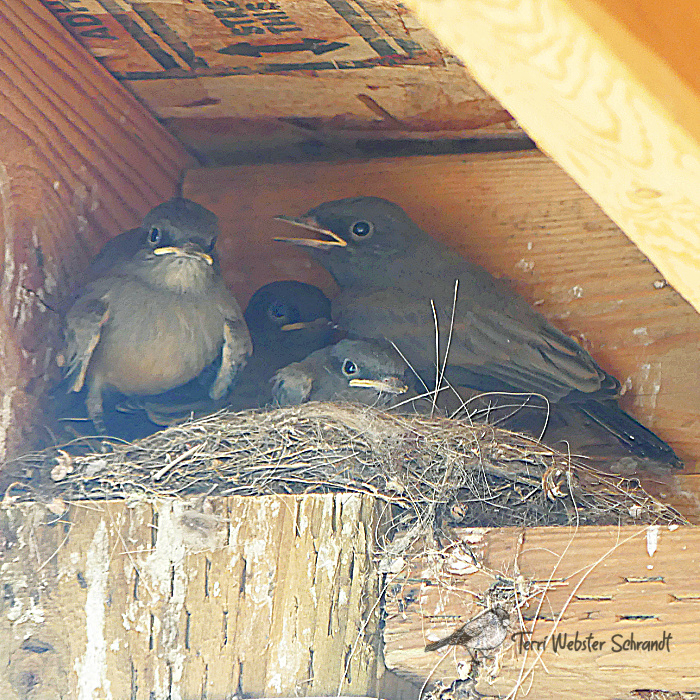
Once they fledge, they typically don’t return to the nest. Last year’s babies all jumped at once. My theory for this clutch is that because they fledged in mid-July, and they typically start migrating south by mid-to-late August, they stayed in the nest a bit longer. They gather strength with every insect they eat.
Friday morning, July 11th, was their day to be free of the nest!
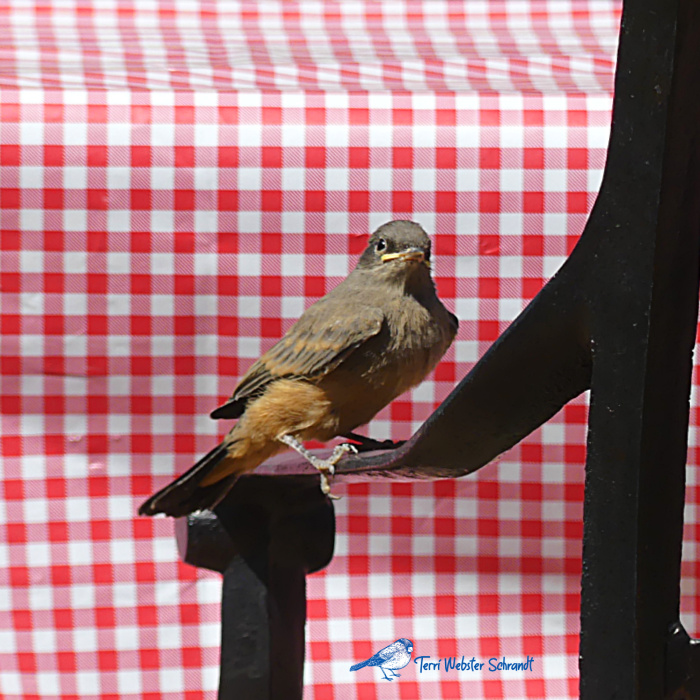
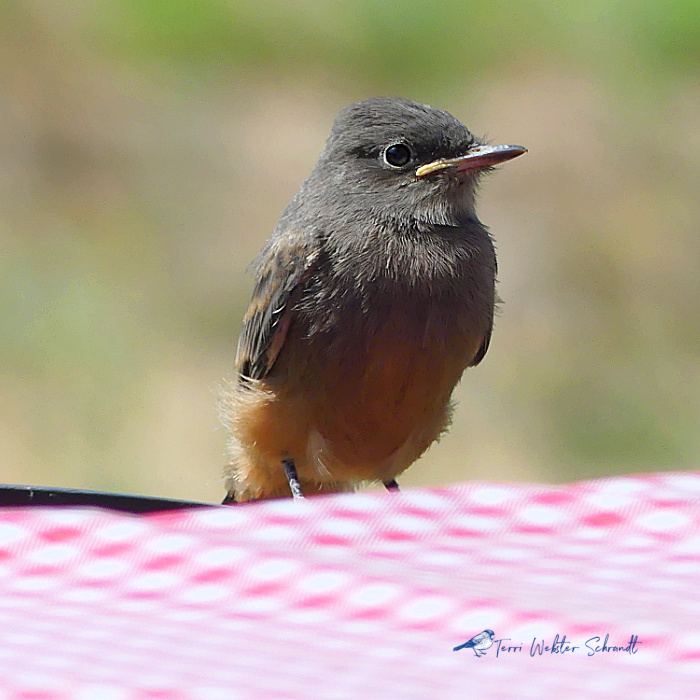

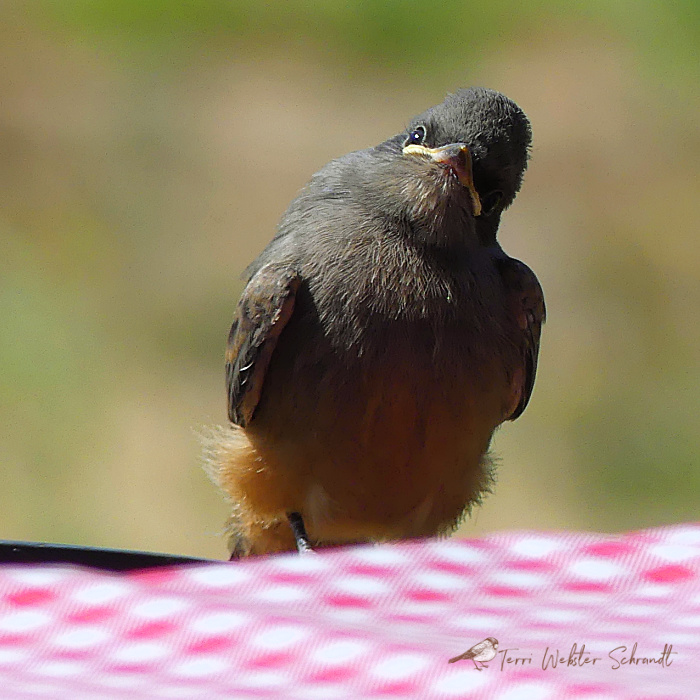

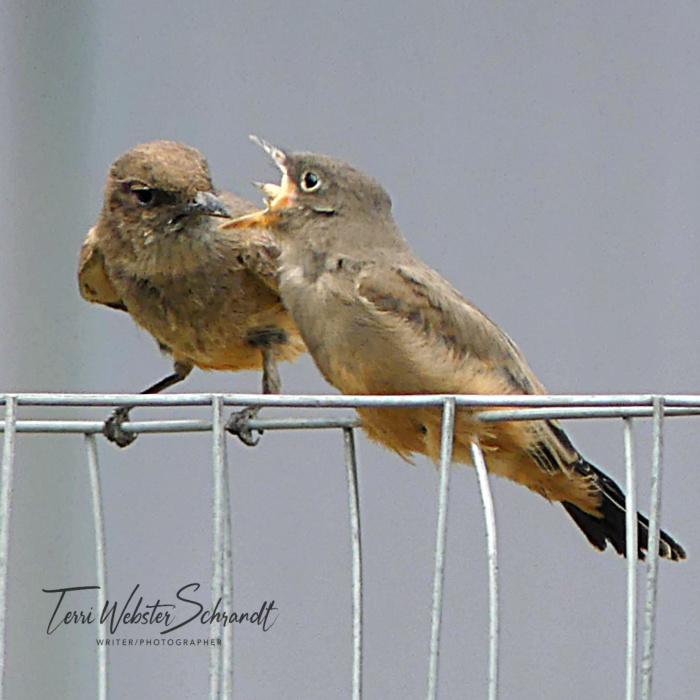
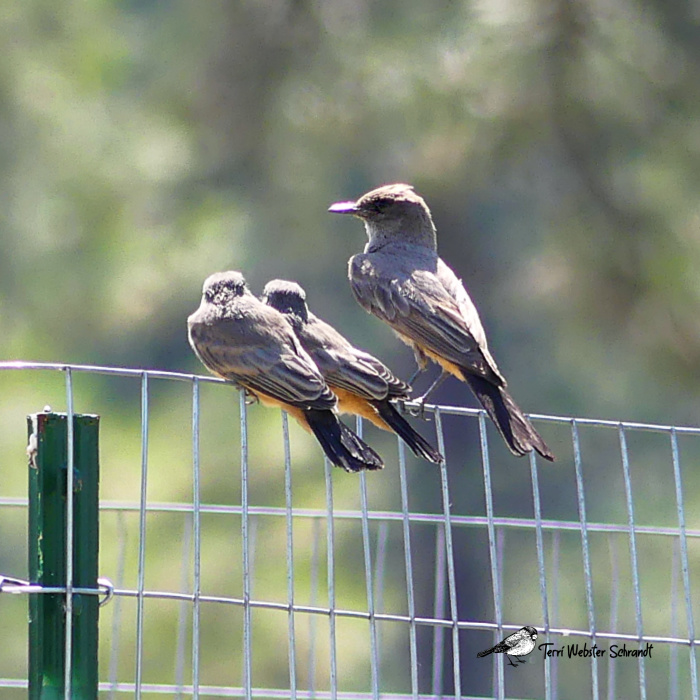
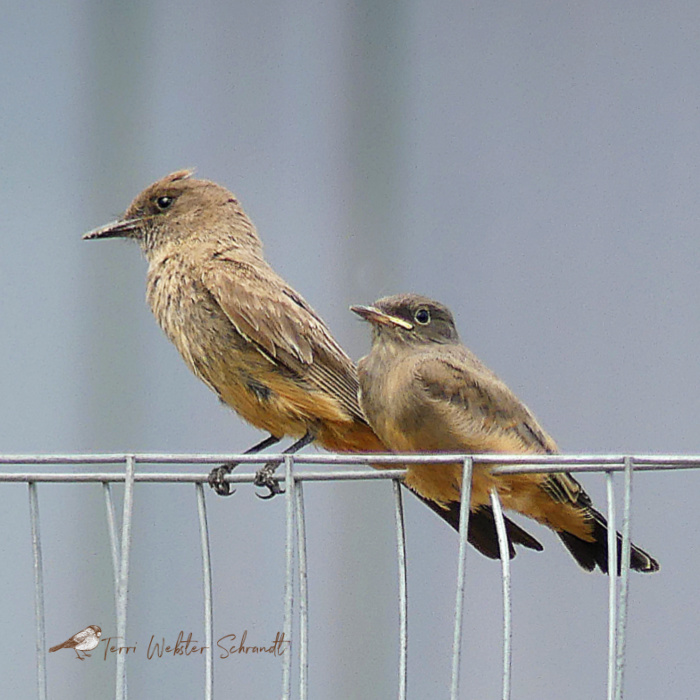
But, something was wrong! What I believe to be the female still hadn’t fledged yet!
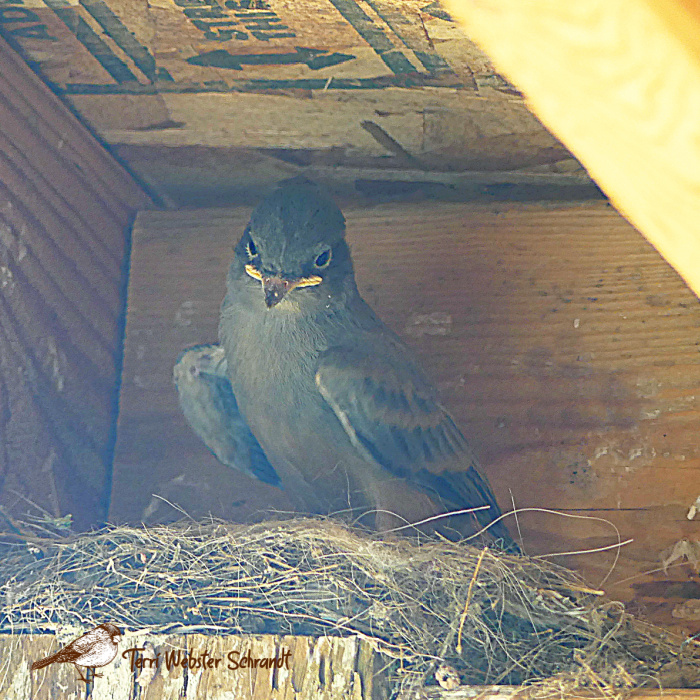
Later that afternoon, I checked the nest and it was empty! Finally!
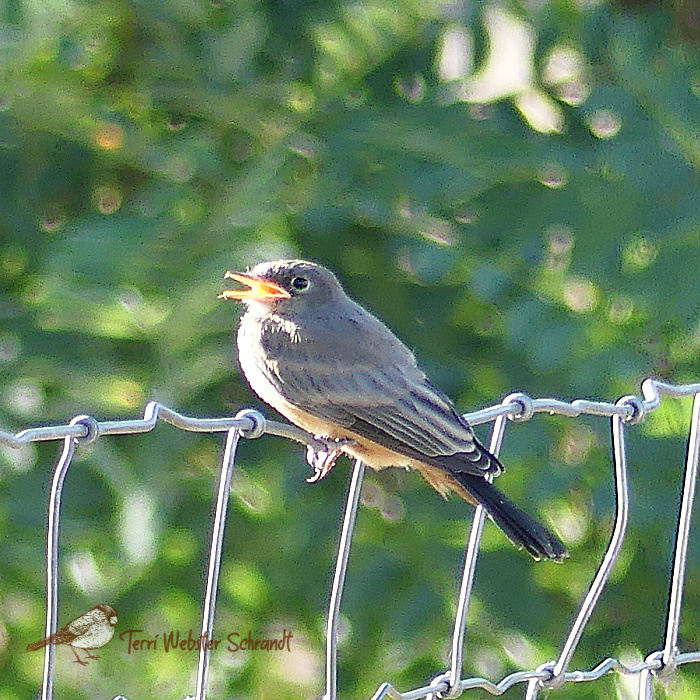
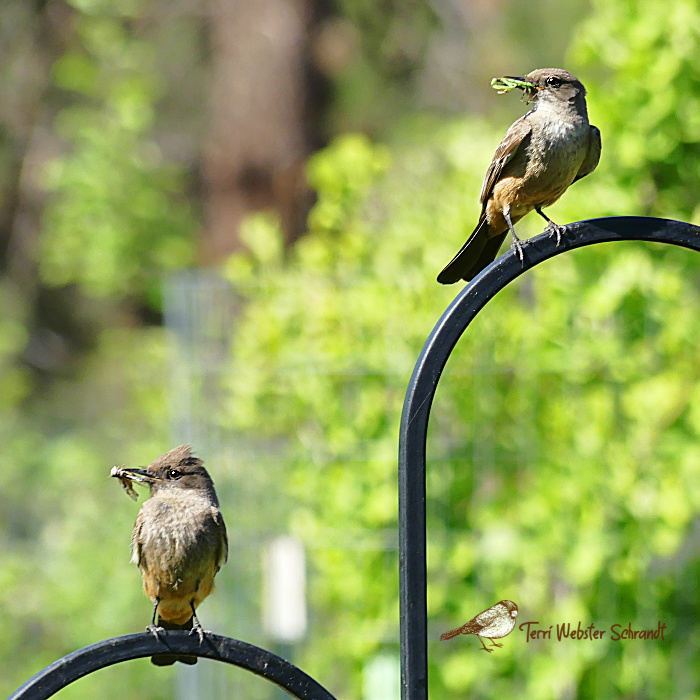
Once fledged, Mom and Pop care for them for up to three weeks, feeding them and teaching them how to catch their own meals.
BUT…
On Saturday afternoon and Sunday morning, I noticed we hadn’t seen Mama in a while. Once babies fledge, they move around as the adults shepherd the babies to safe locations for roosting. We heard their plaintive calls, but they stayed well camouflaged.
At 9:00 am, hubby walked up to me with a dead bird in his hands. It was a female Phoebe! She had flown into the side of the house, probably chasing an insect, and broke her neck. Of course, I was in tears, wondering how it could have happened. How was Papa Phoebe going to take care of four hungry fledglings?
Say’s Phoebes nest in man-made structures, and our house was her end. I can’t stand the irony!
I carefully wrapped her body in paper towels and gently laid her in a box in the garage. We agreed to bury her on the southwest corner of our property near her beloved field.
Later in the afternoon, I walked outside to check on the fledglings. I heard their calls, imploring Papa to feed them. Then I spied a Phoebe on the west fence. Believing it to be a fledgling, I grabbed my camera and took a closer look with my zoom lens.
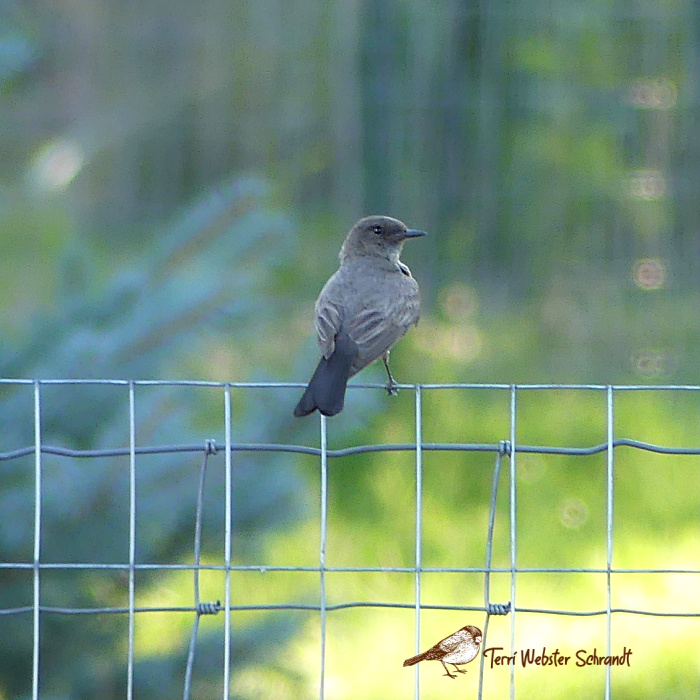
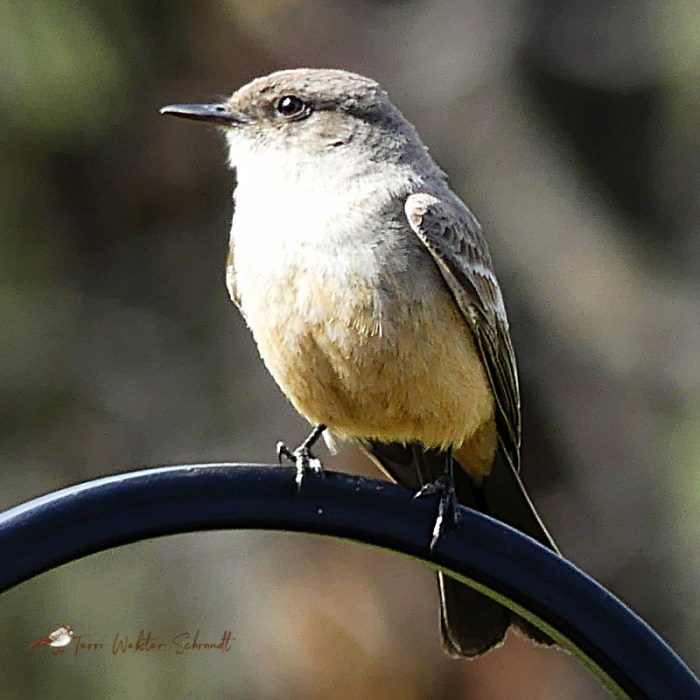
Wait! This is an adult female Phoebe. Her head is rounded, not crested like the male’s. Her beak is fully formed.
It’s Mama Phoebe!
Then I saw her swoop down to catch a fly, and she flew off to the neighbor’s tree.
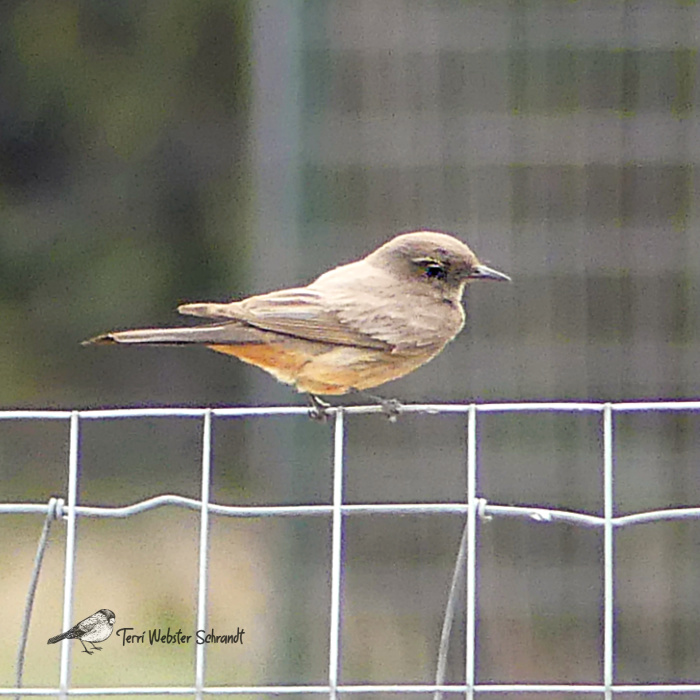
While this story ended well, I was still deeply saddened to see a dead Phoebe. Several mated pairs live all around our area. Nesting Phoebes are territorial and chase off all other birds during the nesting and fledging process. We never saw any others on our property. On my walks, though, I will hear Phoebes calling. I know they are there.
Soon they will migrate south. I was delighted to see them again this year, using the same nest as they did in 2024. Will they be back again in 2026? Stay tuned.
Sharing for Becky’s Simply Red.

Sunday Stills Photo Challenge Reminders
The Sunday Stills weekly-themed photo challenge is easy to join. You have all week to share and link your post. Please use your own original images, whether new or from your archives.
- Remember to title your blog post a little differently from mine.
- Please create a new post for the theme or link to a recent one.
- Entries for this theme can be posted all week.
- Tag your post “Sunday Stills.”
- Don’t forget to create a pingback to this post so that other participants can read your post.
- I also recommend adding your post’s URL to the comments.
If you’re participating in the photo challenge, I look forward to seeing how you interpret this week’s theme! Creativity is encouraged, so please share your own photographs (old or new), poems, original short stories, and music inspired by the theme.
I’ll be taking a short break to attend a cousin reunion near Seattle, WA. Sunday Stills will take a pause on July 27th. The theme “Taste of Summer” will post on August 3.
Please visit my Sunday Stills page for the latest updates.

“Happiness is a bird, who arrives and departs freely.” – Anonymous

All posts are copyrighted on this blog. Please do not repost or reblog.
© 2025 Copyright — secondwindleisure.com — All Rights Reserved






What is YOUR perspective? Please include your name if WP identifies you as “anonymous.