
This is the third and final part of my series for May is National Water Safety Month.
Memorial Day Weekend in the United States heralds in the summer season. This three-day holiday weekend kicks off warm temperatures, family outings, BBQs, and of course, swimming and water recreation.
Memorial Day Weekend also brings an increased risk of child drownings, reports this article.
Pool, lake, and beach parties are favorite ways to celebrate, but parents must remember to stay alert and vigilant while children are in and around water.
For children between the ages of one and four, drowning is the second leading cause of preventable death in the United States (just behind auto accidents). Even when not fatal, water-related accidents cause significant, life-changing injuries from the lack of oxygen to the brain, including permanent brain injury and loss of basic functioning.
There are thousands of tragic stories about children, teens and adults drowning in swimming pools, rivers, lakes and oceans.
Fortunately, most of these can be prevented by being aware of these four drowning prevention tips.
A is for Adult Supervision. Simply put–Parents, WATCH YOUR CHILDREN! Do not assume someone else is going to watch your child at a backyard birthday pool party, or that the lifeguard will see your child in distress in a crowded swimming pool or beach front. It is simply YOUR job to watch your child.
B is for Barriers. Backyard swimming pools without proper fencing can be a potential death trap for young children. Installation and proper use of barriers or “layers of protection” is crucial. Check your county’s ordinances for proper fence height and rules about self-latching gates. It only takes one moment for your child to slip away and head for the water.
C is for Classes. Children and adults should learn to be comfortable in and around the water. Never consider children “drown-proof” or “water-safe” despite age, swimming skills, previous lessons or experience. Adults should take classes in CPR and first aid. Enroll children into swimming lessons. Non-swimming adults and teens should take swim classes, too.
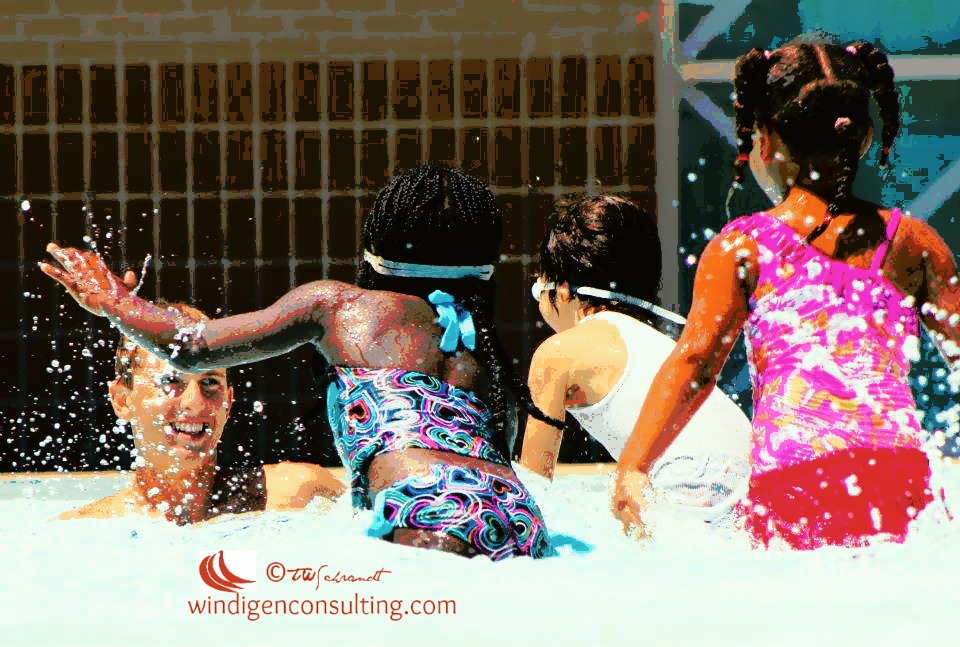
In the featured image, the sheer joy of children taking their swim lesson is priceless! For children to be that excited about swimming while learning to be safe in the water should be encouraged and rewarded.
D is for Devices. In your backyard pool, keep rescue devices handy. Wear a life jacket (PFD or personal flotation device) in open water. In late May and early summer, water temperatures in lakes and rivers can be deceptively cold despite the warm sun. Rivers and lakes this time of year can be filled with swiftly moving debris which can trap unsuspecting swimmers and drag them under the water.
Additionally, there may be state laws and local ordinances requiring the wearing of PFDs. Children and adults should wear life jackets in open water and while on a boat.
 The NRPA (National Recreation and Park Association) recognizes that May is National Water Safety Month and offers these water safety tips.
Are there ordinances or laws about public water safety where you live? Has your community ever experienced a tragic drowning?
Please be safe as the summer swimming season begins.
The above photo was included in the WordPress Weekly Photo Challenge: Jubilant.








What is YOUR perspective? Please include your name if WP identifies you as “anonymous.