
Today is World Wildlife Day! We have had some great photos of wildlife, birds, and other critters featured on Sunday Stills just last week with “flight” and in “fur and feathers” last June.
The Sunday Stills theme this week is Wildlife.
Desert Wildlife
While we were on our winter road trip to Arizona and Nevada in January, I took a few photos of local wildlife.
Our first afternoon in Sedona before the major snow dump, we surprised this Javalina (pronounced “hah-vah-leena”) as it foraged in the bushes near a Sedona art gallery and I quickly got this lucky, if fuzzy shot with my phone.
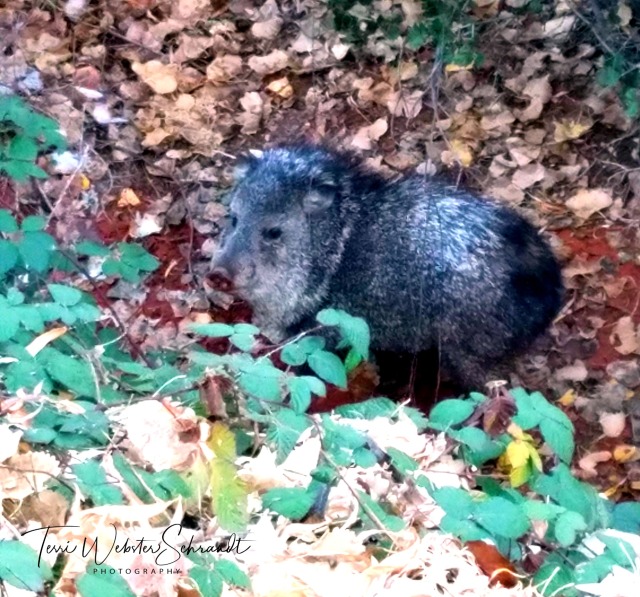
“They aren’t wild pigs but are members of the “peccary” family that originated in South America. They are accustomed to humans but generally ignore them unless provoked. They’ve been known to defend themselves with their long, sharp tusks. The primary habitat of the Javelina are the central and southern areas of Arizona in desert-like terrain near washes with dense vegetation. They are found in the outskirts of Phoenix and Tucson as well as Flagstaff and Sedona. It isn’t unusual for them to live within the desert areas just outside suburban communities.”
Arizona Leisure
While hiking in the Valley of Fire in Nevada, I hit the wildlife bonanza. You saw my hawk image featured last week.
After our wonderful hike through the red rocks, we picnicked and were entertained by the golden mantle ground squirrels that thought they could join us.

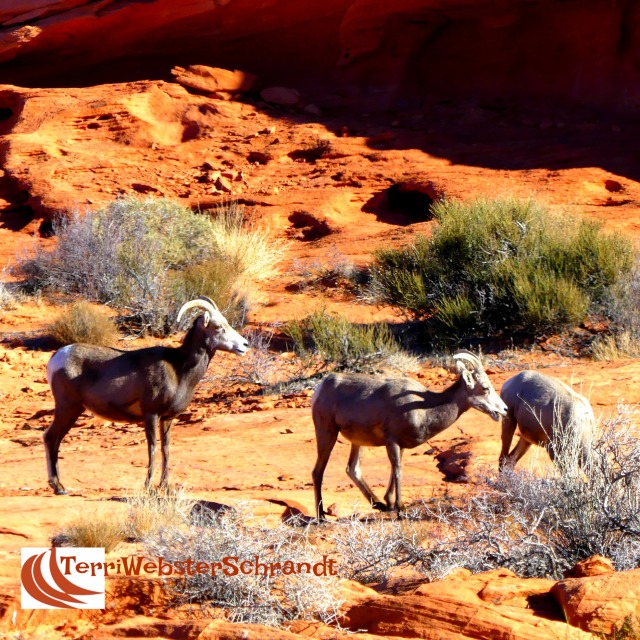
As we drove on to our next scenic area, we noticed a commotion as cars were stopped along the road. To the right, we caught a somewhat rare glimpse of a small herd of desert big-horned sheep grazing. Judging by the size of their horns, they looked like juveniles.
An Urban Wildlife Sanctuary
More and more we hear of wild animals such as bobcats, mountain lions and coyotes (here in California) roaming the suburban streets looking for food. As suburbia builds further into the natural habitats of wildlife, more of these animals will become displaced.
Often, they are shot (or at least tranquilized) and removed by local law enforcement. Like many, the City of Folsom in Northern California (10 miles east of Sacramento) is one of those communities gradually building further into the Sierra Foothills. Thankfully, the City had a vision in the early 1960s to establish a wildlife zoo/sanctuary.
I took my university’s Facility Management students to the Folsom Zoo Sanctuary last October for a class field trip. The zoo is operated by the recreation and parks department and is overseen by a colleague!
We toured the impressive facility, home to both domestic and wild animals which have been abandoned, rescued, or injured and brought here to live the rest of their natural lives in peace. The zoo becomes their permanent home and the animals are cared for by trained staff and veterinarians. Our tour included the behind-the-scenes areas where some animals are temporarily kept away from visitors because of illness or injury.
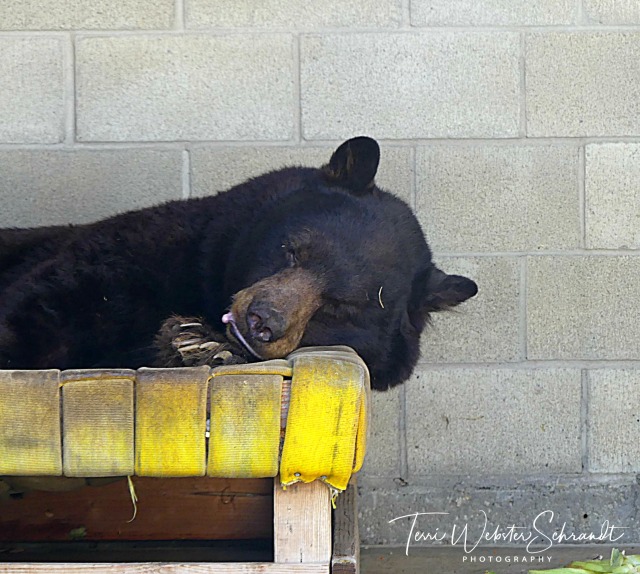
One of my students got up close (but not too personal) with a black bear (one of eight).

Although the zoo sees thousands of visitors a year, the animal residents have areas in their enclosures in which to hide or rest, away from people.
Here is an example of one of the black bears taking a nap.
This adorable white cockatoo poses for the camera.

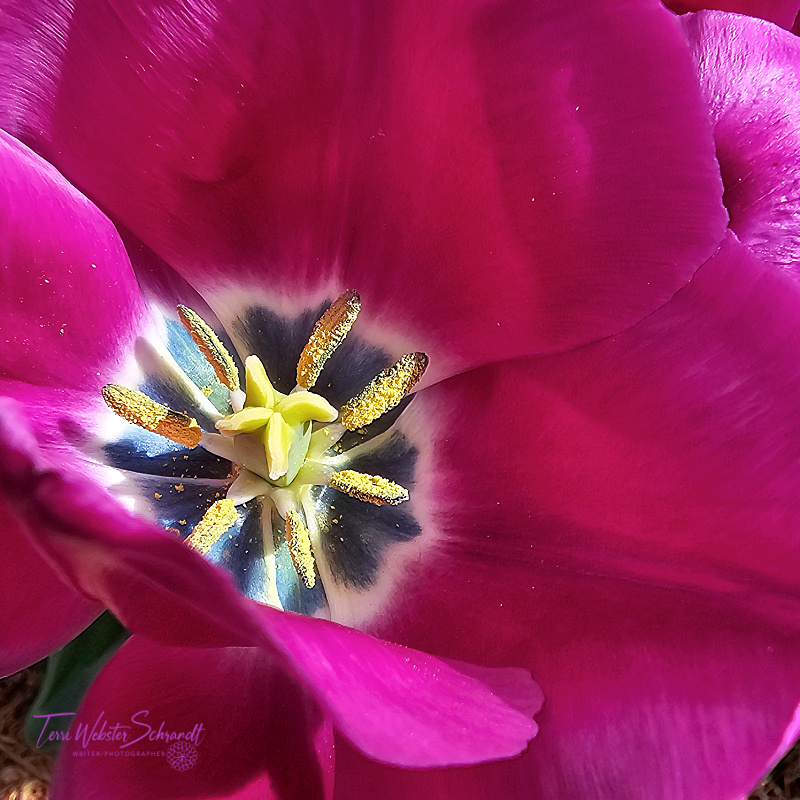
Becky at Life of B has started her Spiky Squares in March photo challenge with the theme of “spiky.” This image and the big-horn sheep are my contributions to Spiky Squares.
A warm welcome to our newest Sunday Stills contributor, Roberts Snap Spot!
Just a reminder to title your blog post differently from mine so SEO can find us all.
I am excited to see what wildlife photos and other creative ideas you will contribute to this week’s Sunday Stills Photo Challenge!










 Second Wind Leisure Perspectives
Leave a reply to Spiky March Squares | The life of B Cancel reply